
Last updated October 16, 2026
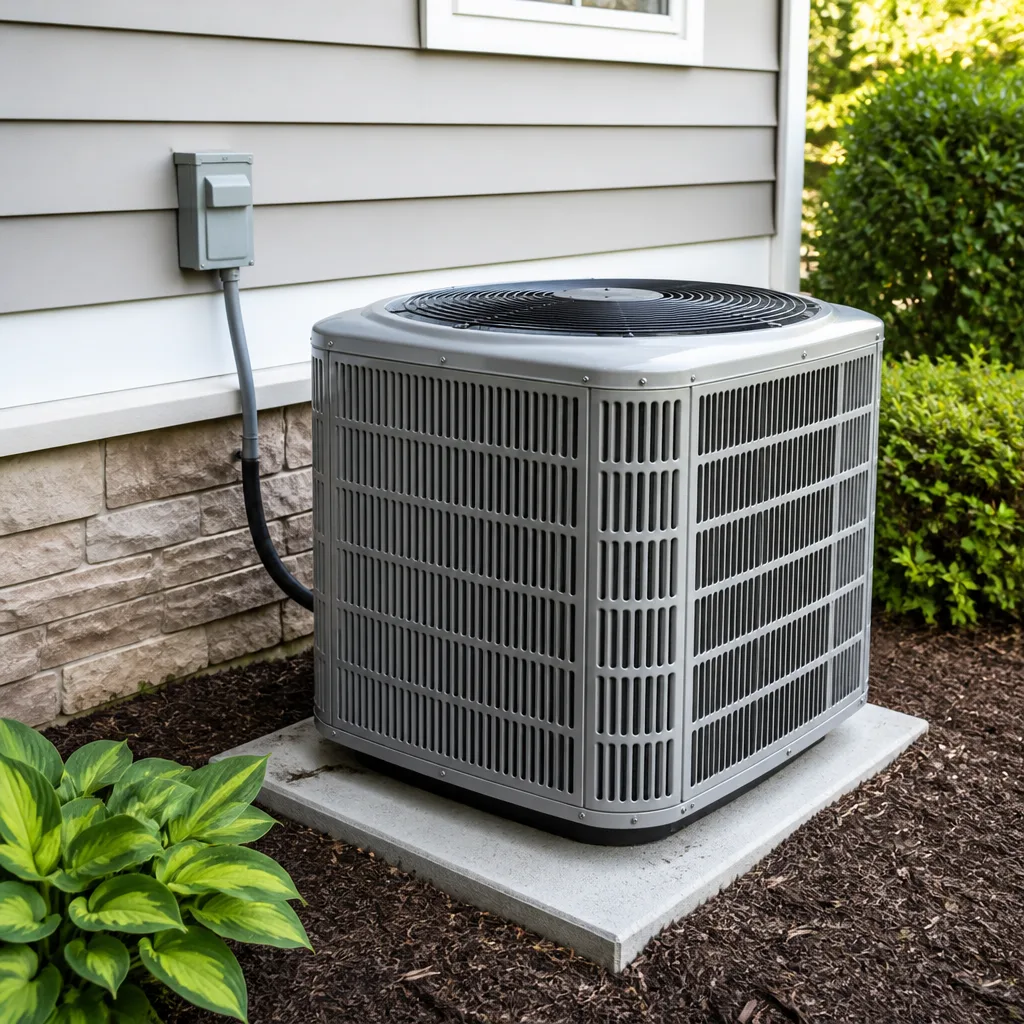 AC repair
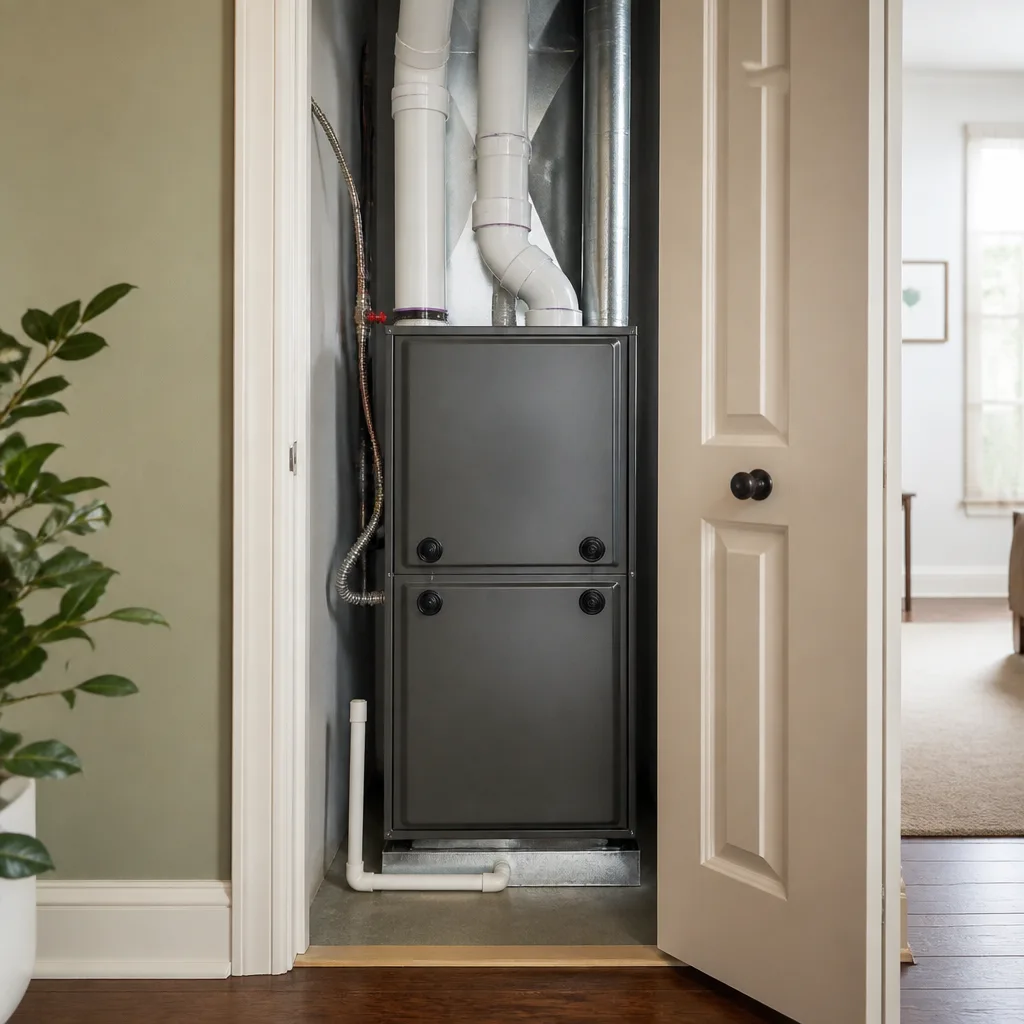 Furnace & heating
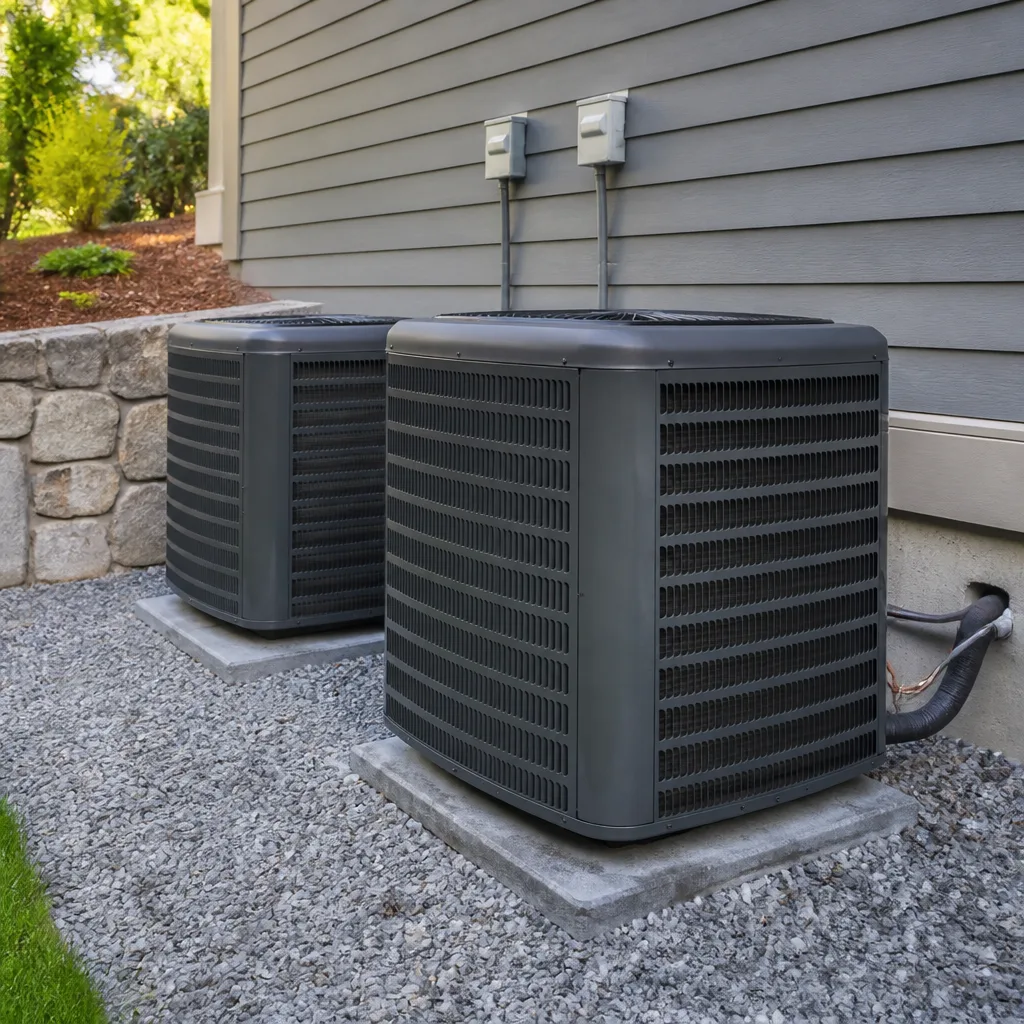 Heat pumps
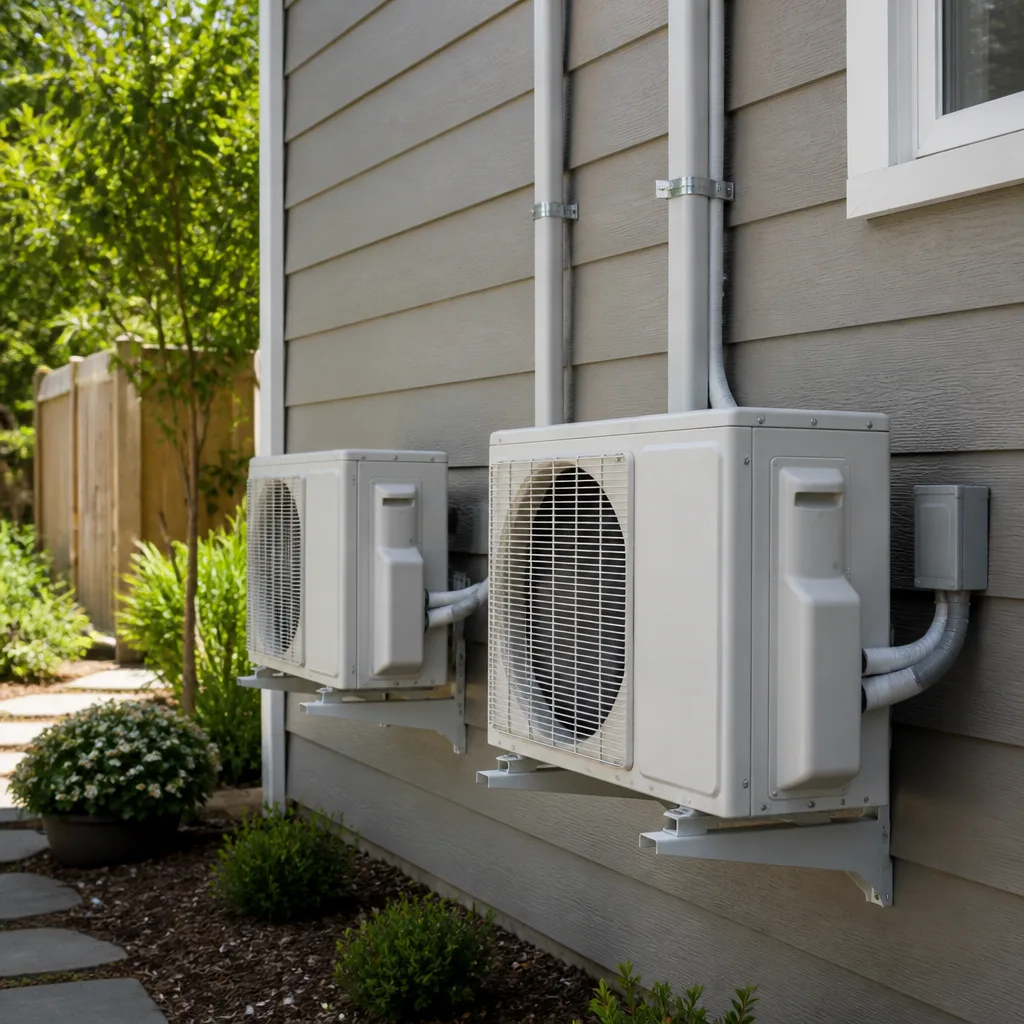 Ductless mini splits
 Carrier
 Trane
Trane Goodman
Seasonal tune-up and full diagnostic on your Carrier, Trane, or Goodman system - readings shown to you before any repair is proposed
Diagnosis first, numbers second - you approve the repair price before a single part goes in.
Get your free estimateSeasonal HVAC Care for Marietta: Year-Round Homeowner’s Guide
Marietta’s HVAC calendar doesn’t match the one on your wall. By the first 90°F day in June, every reputable HVAC company in Marietta is booked solid within 48 hours, and homeowners pay 20 – 40% more for emergency availability. The other reality: that first cold snap in November sends a wave of furnace failure calls from systems that sat untouched since March. This guide-along with our Complete Guide to HVAC in Marietta-breaks down exactly when to act on cooling prep, heating prep, and the shoulder-season windows where you can lock in standard rates, faster dispatch, and a written price before peak demand hits. If you own a home in Marietta, this is the year-round plan that keeps your system from becoming someone’s overtime call.
Styles & brands we work with
Quick Answer
Seasonal HVAC care in Marietta means scheduling cooling prep in March or April, heating prep in September or October, and using the mild shoulder seasons to handle maintenance at standard rates before the summer and winter rush. Heat pumps in newer Marietta builds need additional attention before hard-freeze events, and every homeowner should inspect the outdoor unit after storm season, which runs from late spring through summer. Skipping these windows costs more money and leaves you waiting in line when the weather turns, so book maintenance and inspections in advance to lock in written pricing and guaranteed dispatch.
Table of Contents
- The Marietta HVAC Calendar: What to Do and When
- Spring Cooling Prep: Beat the First 90°F Day
- Heat Pump Care in Marietta: What’s Different
- Storm Season and Tree Debris: Protecting the Outdoor Unit
- Fall Heating Prep: Why Marietta Homeowners Skip It
- Shoulder Season Scheduling: Lock in Lower Rates and Written Prices
- Common Mistakes to Avoid
- When to Call a Professional
- Frequently Asked Questions
- The Bottom Line
The Marietta HVAC Calendar: What to Do and When
Marietta’s climate runs on an 8-month cooling load. From late April through mid-October, your air conditioner or heat pump in cooling mode carries the entire workload. Then comes a short but genuinely cold stretch from December through February, where furnaces and heat pump emergency heat strips get their only real workout. The two shoulder seasons, March through April and late September through early November, are the only windows where you can schedule service without paying emergency pricing or waiting behind a queue of no-cooling calls from your neighbors in East Cobb, Kennesaw, Powder Springs, and Smyrna.
Here’s the seasonal breakdown we recommend for Marietta homeowners:
- March to April: schedule cooling maintenance. Coil cleaning, refrigerant check, capacitor testing, and thermostat calibration. This is the standard-rate window.
- May to September: operating season. Replace air filters monthly, keep the outdoor unit clear of grass clippings and mulch, and watch for drainage issues. Any repair call now costs more and waits longer.
- Late September to early November: schedule heating maintenance. Furnace heat exchanger inspection, burner cleaning, ignition testing, and thermostat changeover. This is also the second standard-rate window.
- December to February: heating season. If the furnace fails now, you’re paying emergency dispatch rates and competing with every other cold house in Cobb County.
The pattern is simple: work ahead of the weather. Homeowners who schedule in April for cooling and October for heating pay standard rates and get their pick of appointment times. Everyone else pays surge pricing by default because demand is high and technician hours are finite.
Spring Cooling Prep: Beat the First 90°F Day
The first 90°F day in Marietta typically lands in late May or early June, but the booking rush starts earlier. Once the temperature crosses 85°F consistently, the phone lines light up. That’s why we tell homeowners to schedule AC maintenance in March or April-see our AC Repair Maintenance Checklist for Marietta Homeowners-when the system is still idle and technicians can actually spend the time needed to catch problems while they’re cheap to fix. In our experience, a properly maintained AC unit in Marietta lasts 12 to 15 years, while a neglected unit running through Georgia’s heat and pollen season often fails at year 8 or 9. The difference is almost always the recurring maintenance.
Here’s what a thorough spring cooling prep should include, whether you handle it yourself or hire a pro-our DIY vs Professional HVAC guide can help you decide:
- Replace or clean the air filter. A clogged filter reduces airflow, forces the blower motor to work harder, and can freeze the indoor coil. In Marietta’s pollen-heavy spring, filters clog faster than the standard 90-day recommendation. Check monthly during spring and summer.
- Clean the outdoor condenser coil. Marietta’s spring pollen and summer grass clippings coat condenser coils quickly. A dirty coil raises head pressure and running temperatures. Use a garden hose with low pressure to rinse the coil from the inside outward, and make sure the unit is off first.
- Check the condensate drain line. Georgia humidity means your AC produces gallons of condensation daily. A clogged drain line causes water backup, overflow shutoffs, and potential ceiling damage. Pour a cup of white vinegar through the drain line monthly during cooling season to prevent algae buildup.
- Test the thermostat. Switch to cooling mode and run the system for 15 minutes before you actually need it. If it doesn’t cool, you’ve bought yourself time to schedule a repair before the rush.
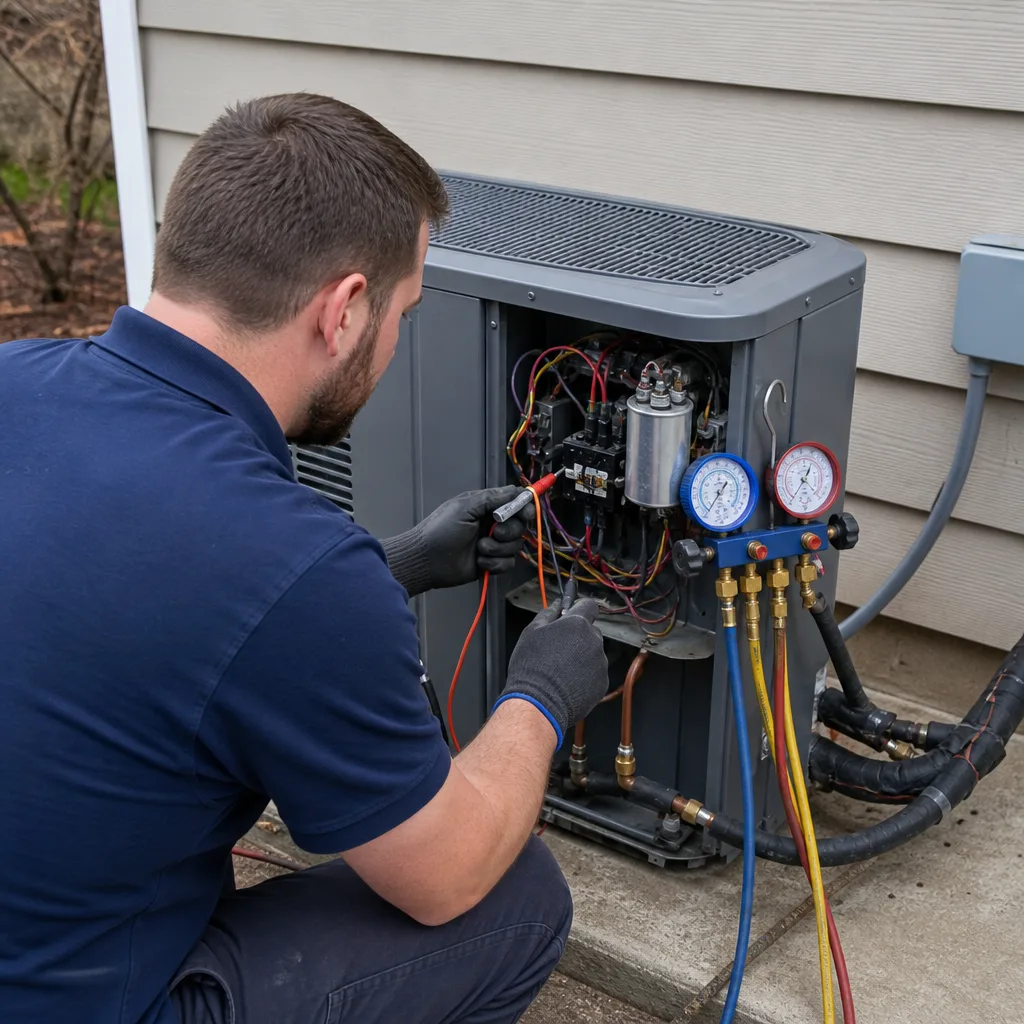
- Inspect the capacitor. Capacitors are the most common AC component to fail in Marietta’s heat. A swollen or leaking capacitor means the compressor or fan motor may not start. This one requires a trained technician with the right testing equipment.
Most of these steps fall into the DIY category, but the capacitor check, refrigerant level verification, and electrical connection tightening need a licensed HVAC technician. The cost of a spring maintenance visit in Marietta typically runs between $100 and $250 depending on what the technician finds, and that visit is a lot cheaper than a July compressor failure that costs $1,800 to $3,500 if the unit is out of warranty. For homeowners who want a written price before any work starts, AC Repair in Marietta covers what to expect from a professional inspection.
Heat Pump Care in Marietta: What’s Different
Newer Marietta builds, especially in developments in West Cobb, East Cobb, and along Barrett Parkway, increasingly use heat pumps instead of separate furnaces and air conditioners. A heat pump is a single system that both cools and heats by moving heat energy rather than generating it. That means the same unit that runs 8 months of the year in cooling mode switches to heating mode in winter, and the seasonal care needs shift accordingly. Where a furnace sits idle all summer and fires up reliably in November, a heat pump never truly rests, so wear accumulates year-round.
The key differences in Marietta heat pump care:
- Outdoor unit clearance matters year-round. Because the heat pump runs in winter too, leaves, pine straw, and mulch can block airflow during heating season just as easily as summer. Marietta’s oak and pine trees drop debris well into December, so clear the unit perimeter monthly all year.
- The defrost cycle needs occasional confirmation. During cold, damp Marietta winter days, frost builds on the outdoor coil. The system runs a defrost cycle to melt it, producing visible steam. If you notice the outdoor unit is a solid block of ice for hours, the defrost control has failed and needs repair. This is a common hard-freeze failure mode in Georgia heat pumps.
- Hard-freeze events require special attention. When temperatures drop into the teens or low 20s, heat pumps lose efficiency and switch to backup electric heat strips, which draw significantly more power. That’s expected. But if the system locks into a continuous defrost or the outdoor unit ices over completely, shut it off and call a technician. Running a heat pump with a failed defrost cycle can damage the compressor.
- Filter replacement is still the top priority. Heat pumps move more air than furnaces because they run at lower temperatures for longer cycles. A dirty filter restricts airflow in both seasons, costing you comfort and money.
Heat pumps in Marietta tend to run efficiently for 12 to 15 years with proper care, about the same as a traditional AC and furnace pair. The difference is that neglect hits heat pumps harder because there’s no off season. We’ve seen heat pumps from Trane, Lennox, and Goodman fail early in Marietta almost exclusively due to years of skipped filter changes and dirty outdoor coils, not manufacturing defects. If your newer home uses a heat pump and you’re unsure about its age or condition, a maintenance visit in the shoulder season is the cheapest way to get a straight answer.
Storm Season and Tree Debris: Protecting the Outdoor Unit
Marietta’s storm season runs from late spring through summer, overlapping with the heaviest cooling demand. Afternoon thunderstorms, high winds, and falling branches are part of life in Cobb County, and the outdoor condenser unit takes the brunt of it. We regularly see calls from homeowners who lost cooling after a storm because a branch knocked the unit out of level, debris clogged the coil, or a power surge damaged the capacitor or control board. The hotter the day after a storm, the worse it feels.
After any significant storm in Marietta, run through this checklist before restarting your system:
- Visual inspection. Walk around the outdoor unit. Check for dented panels, bent fins, or a unit that’s visibly out of level. A unit knocked off its pad by a falling branch or eroded soil creates vibration that stresses refrigerant lines.
- Debris removal. Remove leaves, twigs, and grass clippings from the top and sides. Storms in this area deposit pine needles and oak leaves in places that block airflow within days.
- Check the disconnect box. Marietta thunderstorms bring surges. If the breaker tripped or the disconnect switch is off, reset it once. If it trips again, don’t reset it a third time. That’s a fault condition that needs diagnosis before restart.
- Listen for unusual noise. On restart, listen for grinding, rattling, or a failing compressor start. If the fan spins but the compressor hums and clicks, shut it down immediately and call a technician.
- Check drainage. Marietta summer storms drop an inch of rain in 30 minutes. Make sure the condensate drain from the indoor unit is flowing freely and the outdoor unit isn’t sitting in standing water.
Power surges are the silent killer in storm season. A lightning strike or grid flicker can destroy a capacitor or control board even when the unit itself never loses power. If your system worked before a storm and doesn’t after, the fix is usually a $150 to $500 component replacement rather than a new system. But if the compressor took the hit and the unit is 10 years or older, replacement math starts to make sense. We walk through that decision in detail on our AC Installation in Marietta page.
Fall Heating Prep: Why Marietta Homeowners Skip It
The most predictable failure pattern in Marietta HVAC is the neglected furnace. Every fall, the temperature in Cobb County stays mild through October, sometimes into November. Homeowners who were bundled up in February convince themselves the furnace is fine because it worked all winter, and the warm fall weather makes heating maintenance feel unnecessary. Then the first cold snap arrives in late November or early December, the furnace fires up for the first time in eight months, and something fails. The heat exchanger’s rusted seam cracks open. The igniter, brittle from disuse, snaps. The gas valve sticks. The blower motor seizes.
Here’s what cold-start surprises look like in Marietta homes, and why they happen:
- Rusted heat exchangers. Georgia’s humid summers create condensation inside the furnace cabinet, especially in basement and crawlspace installations common in older East Cobb homes. Non-condensing furnaces with long idle periods accumulate rust. Cracks send carbon monoxide into the home, which is the single most dangerous HVAC failure. An annual heat exchanger inspection is non-negotiable.
- Failed igniters. Hot surface igniters are ceramic and fragile. They run through thermal cycling every winter, and the failure often happens on the first cold start of the season. The part is usually $150 to $350 installed, but the failure leaves you without heat on the coldest night of the year if you skip maintenance.
- Sticky gas valves. Sitting idle for months allows internal lubrication to settle and valves to stick. The first cold start is when problems surface. A stuck gas valve either won’t open at all or opens inconsistently, causing intermittent ignition failures.
- Blower motor failure. The blower motor runs year-round if you have central AC, which masks degradation. But if the motor was already near end of life, the increased workload of heating season finishes it off.
Furnace maintenance in Marietta should happen in September or October, before the nightly lows drop below 50°F. A standard heating tune-up runs $100 to $250 and includes heat exchanger inspection, burner cleaning, ignition testing, safety control verification, and thermostat calibration. If you’ve been skipping it because the weather’s still warm, you’re exactly the homeowner who ends up with a cold-start failure in November. The Furnace Repair in Marietta page covers what those failures look like and what repairs cost.
Shoulder Season Scheduling: Lock in Lower Rates and Written Prices
Marietta’s two shoulder seasons, March through April and late September through early November, are the only times of year when HVAC companies have scheduling capacity. That capacity translates into real advantages for homeowners who plan ahead. When a technician isn’t running from one no-cooling call to the next in July heat, they can spend an unhurried 60 to 90 minutes on your system, catch small problems before they become failures, and explain what they found without watching the clock.
The practical benefits of shoulder-season scheduling in Marietta:
- Standard-rate pricing. Emergency and peak-season calls carry dispatch premiums. A capacitor replacement that costs $250 in April can cost $400 on a 98°F July afternoon simply due to demand. Shoulder-season visits cost what the work actually costs, with no surge applied.
- Faster dispatch. In April and October, most reputable companies in Marietta can schedule within a few days. In July and January, you’re waiting behind every other overheating or freezing house in Cobb County.
- Written price guarantees without time pressure. When demand is low, you can get a written price for any identified repair and actually think about it. In peak season, you’re making a decision while your family sweats or shivers, which is the worst possible negotiating position.
- Replacement quotes with real options. If your system is aging out, shoulder season is when you can get installation quotes for a Trane, Lennox, Goodman, or Rheem system and evaluate them properly. Summer replacement decisions are rushed because nobody wants to live without AC in Georgia.
At Halden Heating and Air Marietta, we built our scheduling model around this exact reality. Every call includes a written price before any work starts and a live arrival time you can track to your door, so there’s no four-hour window and no price surprise at the doorstep. When you book in the shoulder season, you get the same guarantee and the same written price, just without the peak-season markup and the wait. For homeowners who want to understand the full scope of what maintenance and repair work means for a Marietta home, we’ve put together more detail across our Halden Heating and Air Marietta home page.
Common Mistakes to Avoid
- Ignoring the air filter for months. In Marietta’s pollen and humidity, a filter clogged with spring allergens or summer dust cuts airflow and can freeze the coil in as little as 6 weeks. Check it monthly and replace it when it’s visibly dirty, no matter what the package says about “90 days.”
- Planting shrubs and mulch too close to the outdoor unit. We see this constantly in Marietta landscaping projects. The condenser needs at least 18 to 24 inches of clearance on all sides. Encroaching shrubs, piled mulch, and decorative grasses choke airflow and force the system to run hotter and longer.
- Skipping fall furnace maintenance because “it’s still warm.” This is the number one reason for Marietta cold-start failures. The furnace sat all summer, the humid Georgia air did its work on the heat exchanger, and the first cold night reveals the problem. October maintenance costs $150. November emergency repair costs three times that.
- Running the system with a known refrigerant leak. Some homeowners top off refrigerant every spring instead of fixing the leak. In Marietta’s 8-month cooling season, a slow leak becomes a fast leak under constant load, and continued operation risks destroying the compressor. Stop refilling and start repairing.
- Restarting after a storm without checking the unit. If a branch is pressed against the fan blade or the unit is sitting in water, you can cause damage on restart that dwarfs whatever the storm did. The 5-minute visual check costs nothing.
- Waiting until the first heatwave or cold snap to schedule anything. By the time you’re uncomfortable, every company in Marietta is booked. The work hasn’t gotten cheaper, the wait has just gotten longer. Shoulder-season scheduling is the difference between a maintenance visit and an emergency call.
When to Call a Professional
Some HVAC work is genuinely DIY, but most of what ensures safety and longevity requires training and licensing. Call a professional for any refrigerant handling, electrical work inside the cabinet, heat exchanger inspection, gas valve adjustment, or compressor diagnosis. Specifically, call when you see ice on the indoor coil during cooling season, hear grinding or rattling from either unit, smell gas, notice a tripping breaker that won’t stay reset, or suspect carbon monoxide from a furnace. In Marietta, those conditions warrant immediate attention before they escalate into bigger failures. For any AC or furnace issue, Halden Heating and Air Marietta offers free estimates throughout Marietta, including East Cobb, West Cobb, Sandy Springs, and Smyrna. Call (229) 514-0545 and speak to a real person, 24/7, not a voicemail tree.
Frequently Asked Questions
Most HVAC maintenance visits in Marietta run between $100 and $250 for a standard seasonal tune-up, depending on the system type and what the technician finds during inspection. Heat pump maintenance lands on the higher end of that range because the system requires inspection of both cooling and heating components. Repairs identified during maintenance are priced separately, and with Halden Heating and Air Marietta, every price is written before work starts. Call (229) 514-0545 for an exact quote; estimates are free.
Replace your air filter every 30 days during spring and summer in Marietta, when pollen counts spike and the system runs near-continuously. In fall and winter, every 60 to 90 days is usually sufficient unless you have pets or renovation dust in the home. The Georgia climate makes the standard “90-day” filter recommendation unrealistic for most local households during cooling season.
Yes, in most cases. Halden Heating and Air Marietta offers same-day service for AC and furnace repairs in Marietta when called during business hours, and emergency service is available 24/7 with a live person answering the phone. Peak summer afternoons can stretch dispatch times, so morning calls generally get faster service. Call (229) 514-0545 for current availability.
Repair when the failing component costs under $500 and the system is under 10 years old. Replace when the compressor, heat exchanger, or coil fails on a system over 12 years old, or when repair costs exceed 40% of replacement value. Marietta’s long cooling season accelerates wear on aging units, so replacement often becomes the better financial move sooner than in cooler climates. If you’re weighing options, get a written replacement quote in the shoulder season for a Trane, Lennox, Goodman, or Rheem system and compare it against repair costs.
Georgia Power and Cobb EMC both run seasonal rebate programs for high-efficiency heat pumps and air conditioners in the Marietta area, and federal tax credits for qualifying heat pump installations remain available through the Inflation Reduction Act. Manufacturer rebates from brands like Trane, Lennox, Goodman, and Rheem rotate throughout the year. The rebate landscape changes frequently, so call (229) 514-0545 and we’ll help you sort out which programs currently apply to your situation.
Set your thermostat to 78°F during cooling season when you’re home and awake, and 82°F or off while you’re away. In winter, 68°F while home and awake, and 60°F while asleep or away. Every degree of additional cooling in Georgia’s summer costs roughly 3 to 5% more on your utility bill. A programmable or smart thermostat that adjusts automatically saves Marietta homeowners $100 to $200 annually without any comfort sacrifice.
The Bottom Line
Marietta’s climate punishes reactive HVAC habits. The 8-month cooling load means your air conditioner or heat pump runs harder and longer than systems in most of the country, and the warm fall lulls you into skipping furnace prep until a November cold snap exposes the neglect. The fix is scheduling, plain and simple: book cooling maintenance in March or April, heating maintenance in September or October, and use those shoulder-season visits to lock in standard pricing, written quotes, and real capacity before the heat or cold turns routine work into emergency work. For year-round help, explore our more guides & resources. Your system lasts longer, your repair bills stay smaller, and you never learn how expensive a July capacitor or a cracked heat exchanger can be just because the calendar worked against you.
Written by Andre Fuller, Owner at Halden Heating and Air Marietta, serving Marietta since 2004.
See the difference
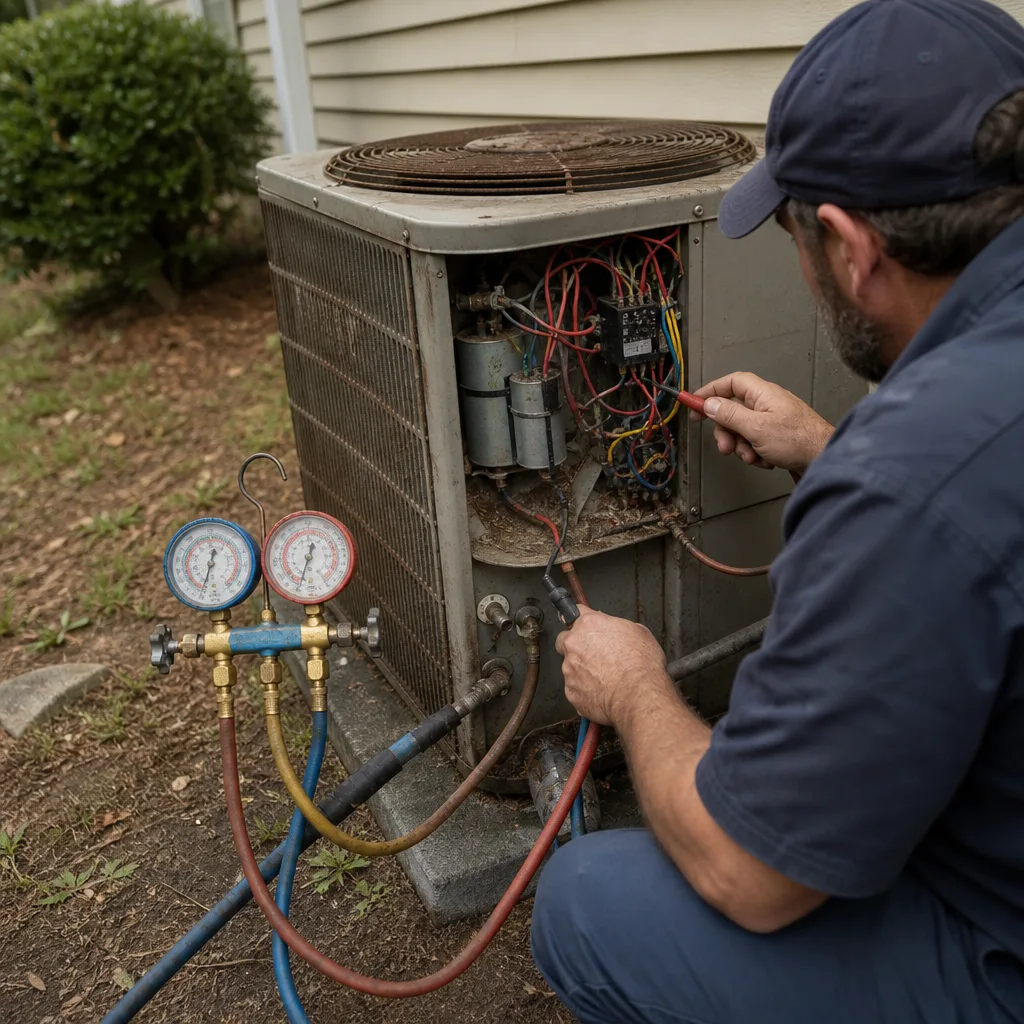 Before
 After
After Before
 After
After Before
 After
After