
Last updated October 16, 2026
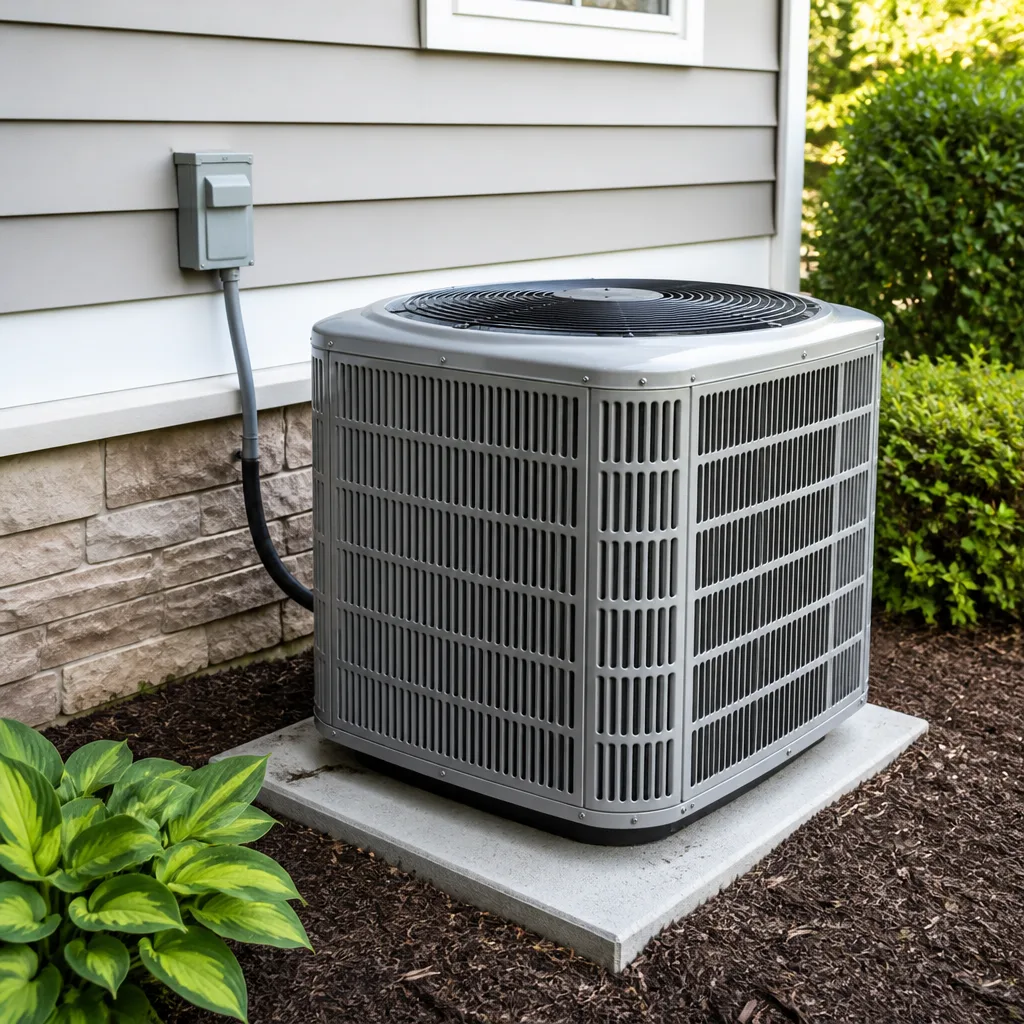 AC repair
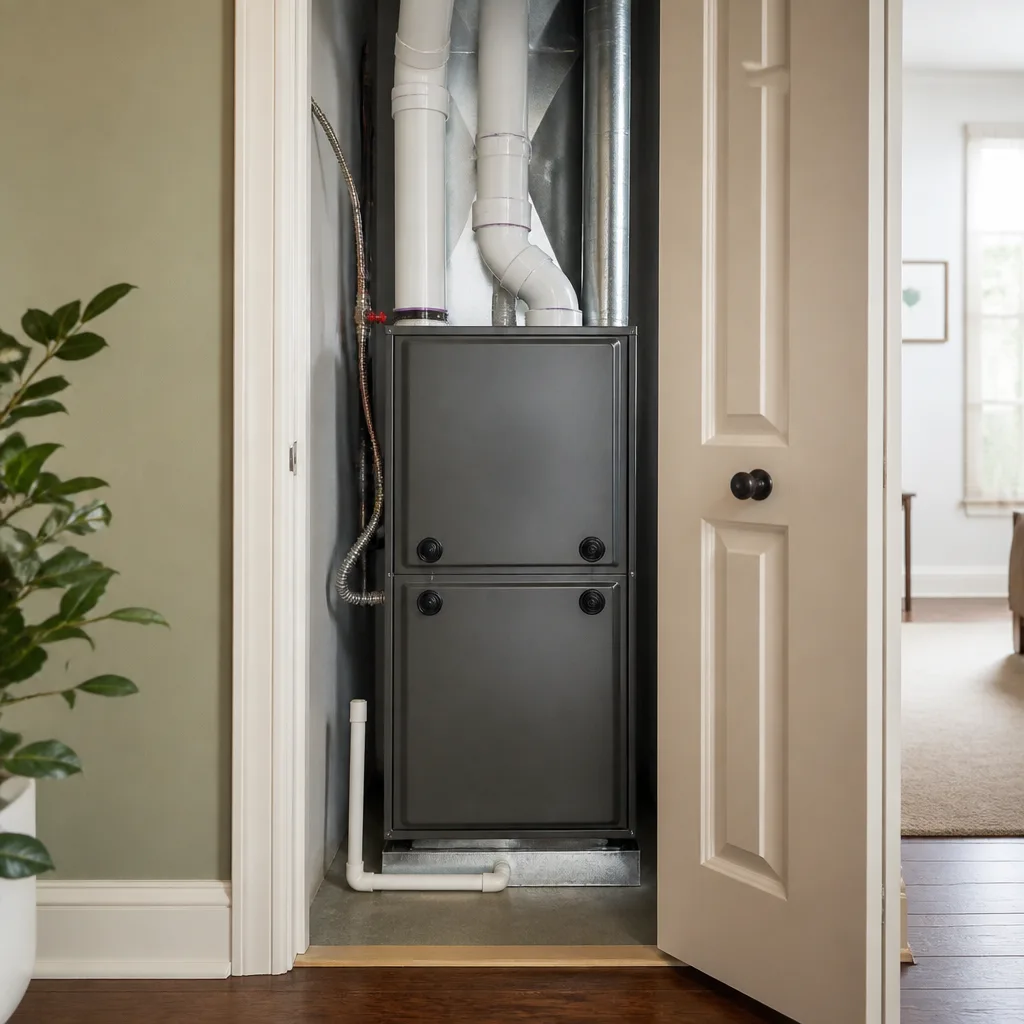 Furnace & heating
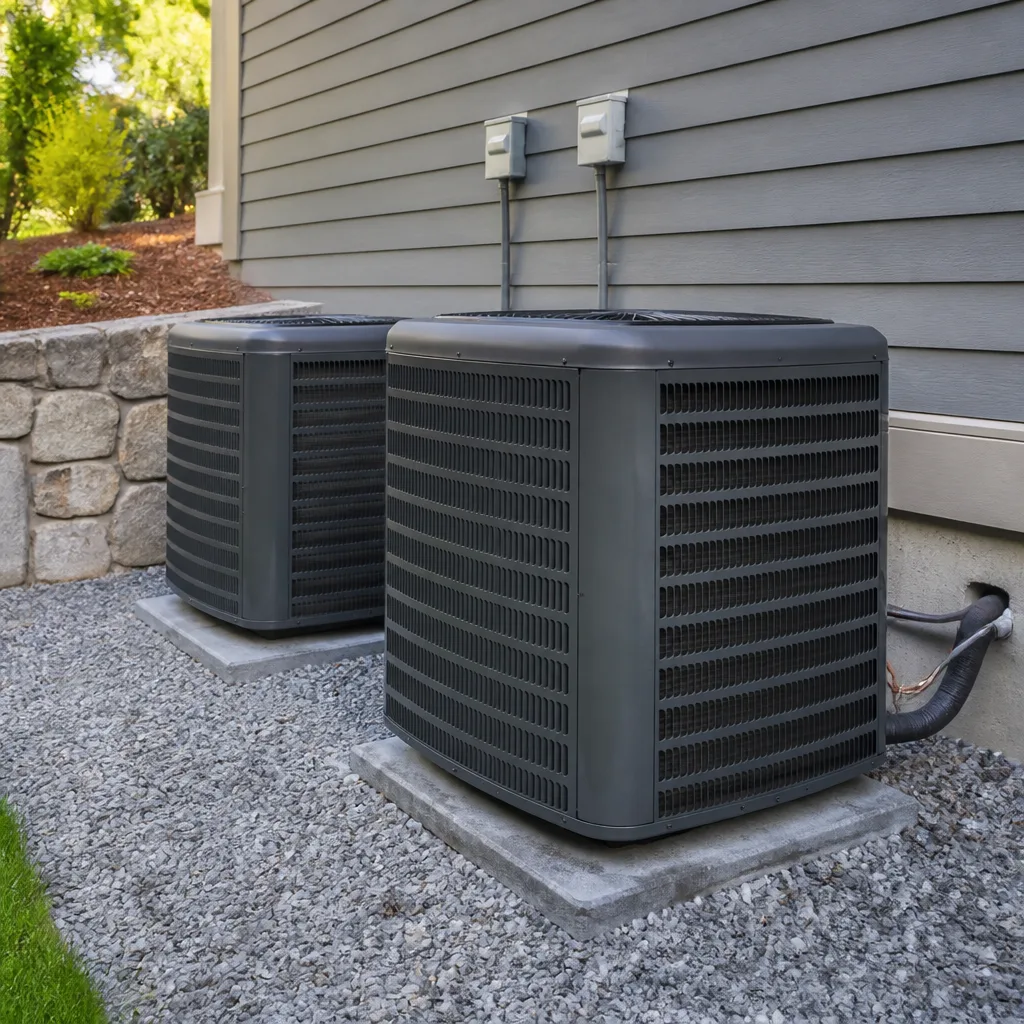 Heat pumps
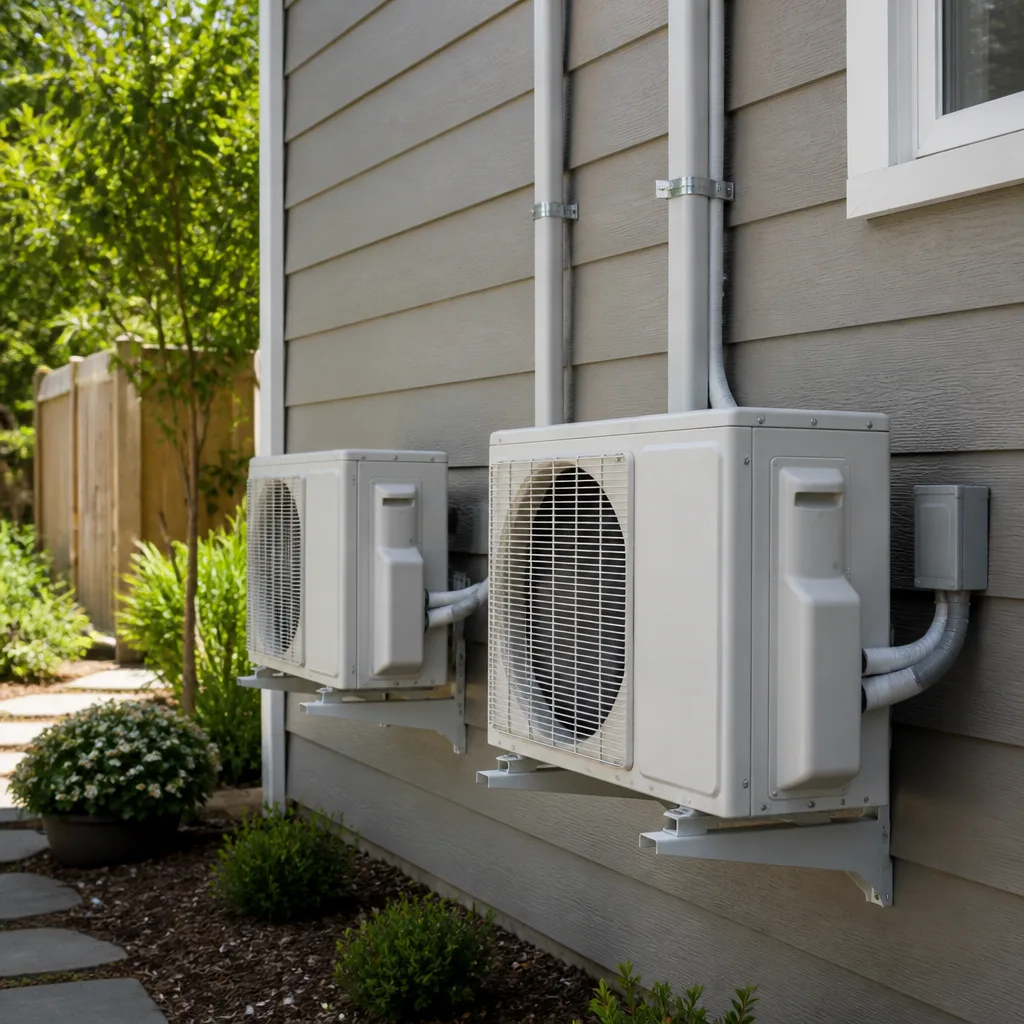 Ductless mini splits
 Carrier
 Trane
Trane Goodman
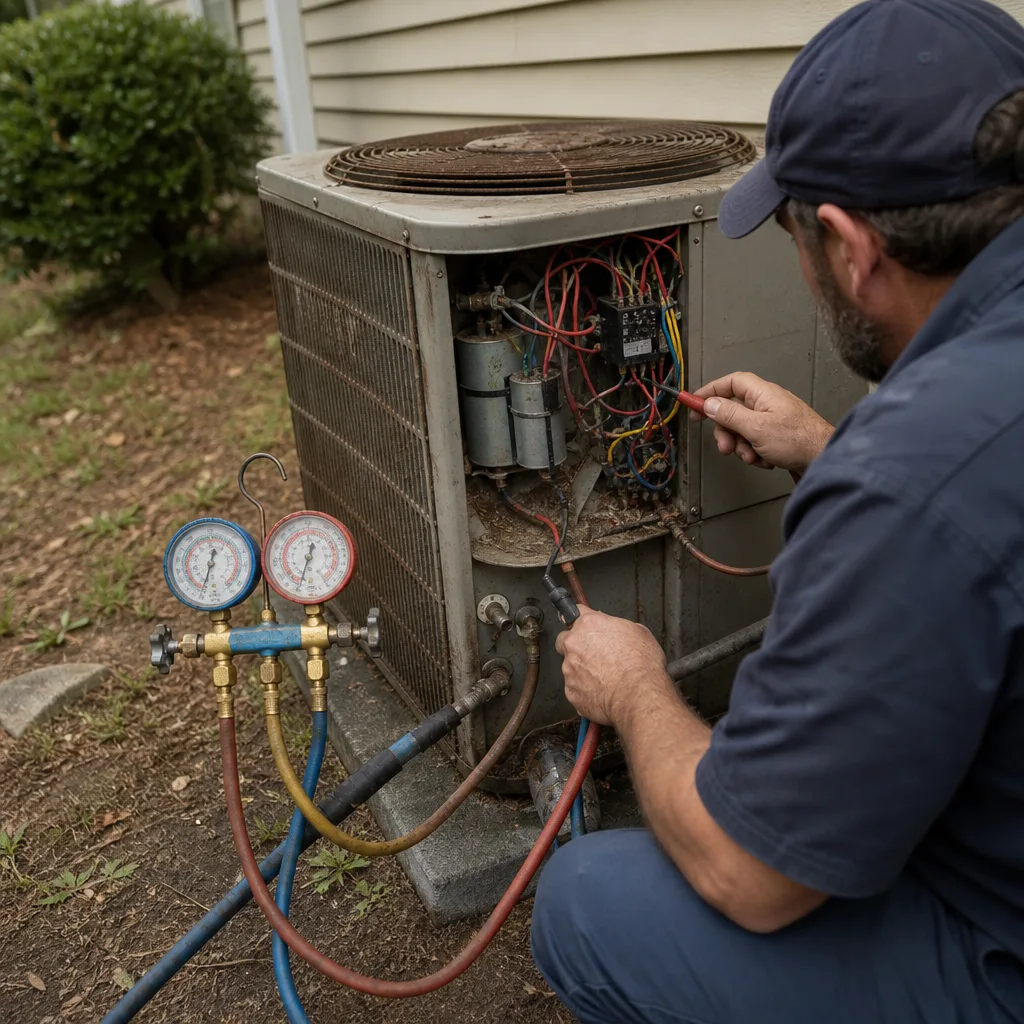
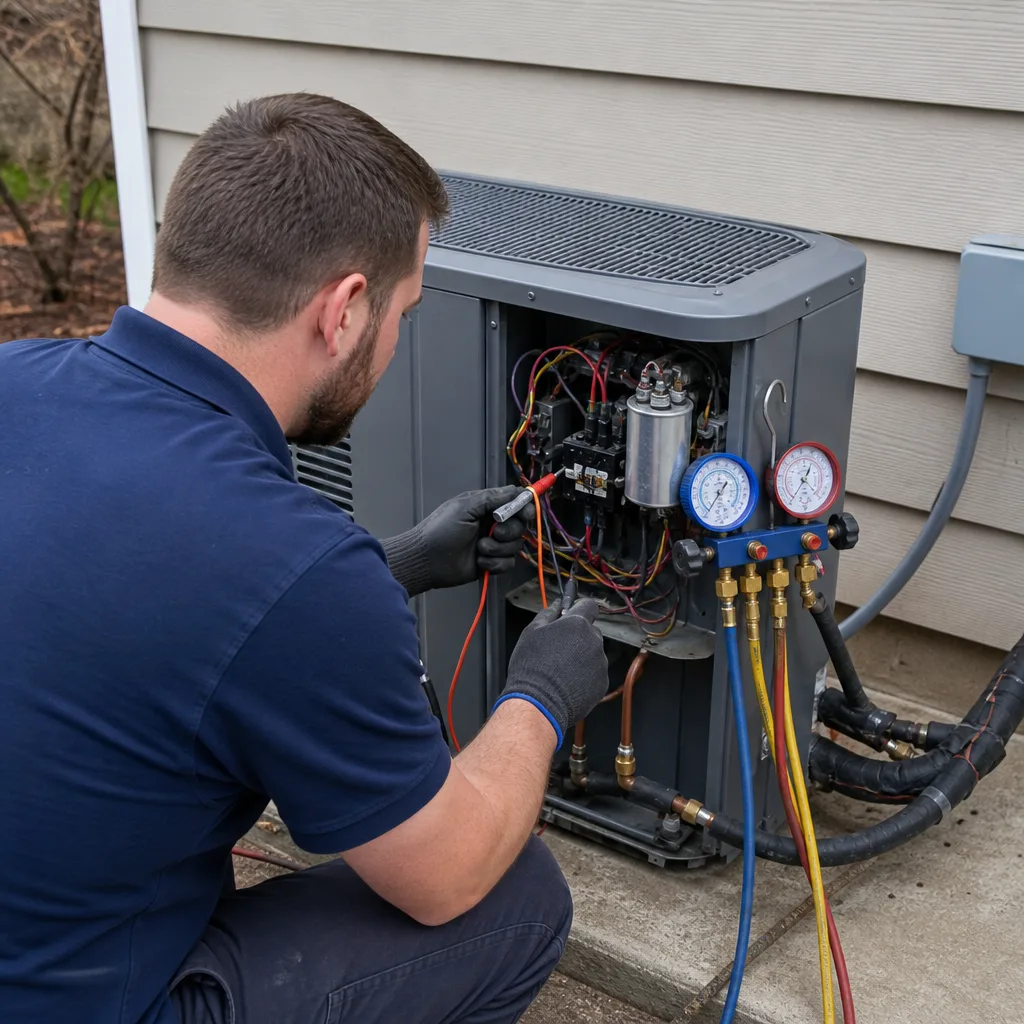
Seasonal tune-up and full diagnostic on your Carrier, Trane, or Goodman system - readings shown to you before any repair is proposed
Diagnosis first, numbers second - you approve the repair price before a single part goes in.
Get your free estimateThe Complete Guide to HVAC in Marietta
Marietta averages 18 days above 95°F each summer, yet most “complete HVAC guides” are written for climates that never crack 90. That’s a problem when your condenser is sitting in 98-degree heat behind a house on clay soil that shifts with every rainstorm. This guide is built for your zip code. You’ll learn what actually breaks in Cobb County, see our HVAC Cost Breakdown: The Marietta Homeowner’s Reference for 2026 for what repairs should cost here, what rebates most contractors skip at quote time, and how to read a Georgia HVAC license before you let anyone touch your system.
Quick Answer
HVAC in Marietta means designing for humidity as much as heat. The right system is sized for a humid subtropical climate, installed with attention to the ductwork realities of your specific neighborhood (crawl space, slab, or basement), and maintained before the shoulder seasons when failures spike. Most AC repairs in Marietta run between $150 and $500, a full system replacement typically lands between $7,000 and $14,000 depending on efficiency and ductwork, and the smartest money you’ll spend is a pre-season tune-up that catches refrigerant leaks before July turns your upstairs into a sauna.
Styles & brands we work with
Table of Contents
- Why Marietta’s Climate Demands Different HVAC Specs
- What HVAC Work Actually Costs in Marietta
- Neighborhood by Neighborhood: Ductwork Realities Across Marietta
- Choosing the Right System Type for a Marietta Home
- Georgia Power Rebates and Cobb County Incentives Most Contractors Skip
- Marietta’s Shoulder Seasons: The High-Risk Months and What to Do Before Them
- How to Read a Georgia HVAC Contractor License
- Common Mistakes to Avoid
Why Marietta’s Climate Demands Different HVAC Specs
Marietta sits in a humid subtropical zone where the average relative humidity runs about 72%. That’s the number that changes everything. A system sized only for temperature will cool the air but leave it clammy, and a house that feels damp at 74 degrees is a house where the thermostat keeps getting pushed lower. Homeowners respond to humidity by overcooling, and overcooling drives up the electric bill without solving the actual problem: your AC isn’t removing enough moisture.
In our experience across Marietta, the fix is rarely just a bigger unit. It’s matched, correctly sized equipment with a variable-speed air handler that keeps the blower running longer at lower speeds when humidity is high. That longer runtime pulls more moisture from the air without dropping the temperature to arctic levels. If you’re replacing a unit in an older Marietta home, do not accept a quote that only looks at square footage. A proper load calculation (called a Manual J) accounts for humidity, windows, insulation, and duct leakage, and it’s the difference between a system that keeps up in August and one that runs constantly while the upstairs stays sticky.
What HVAC Work Actually Costs in Marietta
Real numbers matter, so here’s what we see across Cobb County in 2025. Most AC repairs in Marietta run between $150 and $500 depending on the part. A capacitor replacement (the component that gives the compressor its starting jolt) typically falls at the low end, $150 to $250. A refrigerant recharge (topping off the coolant your system needs to produce cold air) runs $250 to $450, though if the system is low, that means there’s a leak that a recharge alone won’t fix. A condenser fan motor runs $300 to $500. A blower motor inside the air handler trends higher, $450 to $700. Ignoring a symptom never makes it cheaper.
Full system replacement in Marietta is a bigger conversation. Here’s the range we quote most often:
- Basic single-stage system (14-15 SEER2): $7,000 to $10,000, depending on home size and duct condition
- Mid-range two-stage system (16-17 SEER2): $9,500 to $12,500, better humidity control and lower noise
- High-efficiency variable-speed system (18-20+ SEER2): $12,000 to $16,000+, the best dehumidification and quietest operation
Ductwork replacement, if your 1970s East Cobb ranch still has original ducts, adds $3,000 to $7,000 depending on access. And if your home uses a heat pump instead of a traditional AC plus furnace, the cost structure shifts slightly upward on the front end but with year-round utility savings that matter in a climate where we run the system nine months of the year.
Every quote from Halden Heating and Air Marietta home includes a written price before any work starts. That’s not an upgrade; it’s the baseline. Call (229) 514-0545 for exact numbers on your specific home.
Neighborhood by Neighborhood: Ductwork Realities Across Marietta
Marietta isn’t one housing style, and the ductwork under your floors or above your ceiling varies wildly by neighborhood. Here’s what we’ve seen working homes from Whitlock Avenue to the county line:
- East Cobb ranches (Indian Hills, East Lake, Wheeler areas): Most of these homes sit on crawl spaces or partial basements. Ductwork down there deals with high humidity from the exposed earth, and we regularly find crushed or disconnected flex ducts. Sealing the crawl space and insulating the ducts properly can cut conditioning losses by 20 percent or more.
- Historic homes near the Square: Many date from the 1920s through 1950s. Original plaster walls and pier-and-beam foundations make retrofitting central air expensive. Mini-split systems (ductless units mounted on walls) are often the smartest play here, preserving the home’s character while delivering real zoning.
- 1970s-80s split-levels and two-stories (West Cobb, Dallas Highway corridor): The common complaint is uneven temperatures: the downstairs freezes while the upstairs bakes. The cause is almost always undersized or collapsed ducts feeding the upper floor. Zoning dampers and duct repair solve what another ton of cooling won’t.
- 2000s-2010s townhomes and new construction (near the Battery, Barrett Parkway): These homes use heat pumps almost exclusively. The ductwork is typically in good shape, but the equipment is builder-grade and often under-warrantied. We see compressor failures at the 8-to-10-year mark on these units at a much higher rate than on the Trane, Lennox, or Carrier systems we install on replacement.
When we quote an installation, we inspect the ducts before we price the equipment. There’s no point putting a variable-speed Goodman or Rheem system on leaking ductwork. You’d be paying for efficiency the house never gets to use.
Choosing the Right System Type for a Marietta Home
Marietta homeowners have three realistic options when replacing comfort equipment. Here’s how each one fits the climate and the house stock:
- Split system with gas furnace and AC: This is the classic setup for homes with natural gas service, which means most of Marietta inside the city limits and much of Cobb County. It handles our humid summers fine and delivers warm, even heat in winter. If you’re in a 1960s-90s home with intact ductwork, this is usually the default recommendation when gas is available at the street.
- Heat pump: By far the most common in newer construction, especially townhomes and 2000s-era subdivisions. A heat pump runs the AC in reverse during winter, moving heat instead of creating it. Modern heat pumps work well down into the 20s, which covers almost all of a Marietta winter. If your home is all-electric with no gas line, a heat pump is your best option, paired with a variable-speed air handler for humidity control.
- Ductless mini-splits: Ideal for the historic district, finished attics, bonus rooms over garages, or any space where ductwork doesn’t exist or can’t be added easily. Each indoor unit heats and cools independently, so you can keep the primary suite at 68 while the guest room sits at 74. Installation runs higher per room but avoids the cost and disruption of duct installs in older homes.
Brand matters less than the installation and the matching of components. We service and install Carrier, Trane, Lennox, Goodman, Rheem, York, Daikin, Bryant, and American Standard, and the honest answer is that every major manufacturer builds both budget and premium lines. The quality of the install team, the load calculation, and the ductwork condition determine performance more than the logo on the outdoor unit. That said, York and Rheem both make excellent value-priced heat pumps that hold up well in our climate, and Lennox makes some of the quietest variable-speed condensers we install, which matters when the unit sits outside a bedroom window.
For a full replacement guide, see our AC Installation in Marietta page.
Georgia Power Rebates and Cobb County Incentives Most Contractors Skip
Here’s something most Marietta homeowners never hear at quote time: Georgia Power runs a residential rebate program on qualifying high-efficiency heat pumps and AC replacements. The rebate amount depends on the equipment’s efficiency rating and can run several hundred dollars. Some contractors either don’t know the program exists or quietly keep the rebate for themselves by not mentioning it. That money belongs to you.
The program details shift, but the general structure works like this:
- Choose a system that meets the SEER2 or HSPF2 efficiency minimums set by Georgia Power.
- Have the system installed by a licensed Georgia contractor (we handle the paperwork, but you should still know what you’re entitled to).
- The contractor submits the rebate application with proof of purchase and installation.
- You receive a check or bill credit, usually within 4 to 8 weeks.
There are also federal tax credits on qualifying heat pumps and high-efficiency central AC systems, which can knock up to $2,000 off your federal tax bill. These credits apply to the equipment cost and are claimed when you file. If you finance through certain approved programs, additional incentives may apply.
Ask about rebates at the quote stage, not after installation. Any reputable Marietta HVAC contractor should volunteer this information. AC Repair in Marietta doesn’t typically qualify for rebates, but replacement and efficiency upgrades often do.
Marietta’s Shoulder Seasons: The High-Risk Months and What to Do Before Them
Most system failures in Marietta don’t happen in July, when everyone expects them. They happen in March and October, during what we call the shoulder seasons. Here’s why: your system spent weeks running lightly, then the weather swung hard. The first truly hot day in April hits a condenser with a weak capacitor that’s been sitting since October, and it fails. The first cold snap in late October reveals an igniter that’s been cracked since March. The system wasn’t fine; it just wasn’t being asked to work.
The fix is simple, cheap, and boring: schedule a pre-season check in late February and late September. Here’s what that check should cover:
- Capacitor testing: The most common failure point on any AC. A weak capacitor fails under the first heavy heat load.
- Refrigerant pressure check: Low refrigerant in March means a leak that will kill your compressor by August.
- Condensate line cleaning: In Marietta’s humidity, algae grows in drain lines fast. A clogged line floods ceilings and triggers float switches in the middle of the night.
- Heat exchanger inspection on furnaces: This is a safety item. Cracks allow carbon monoxide into the house.
- Igniter and flame sensor cleaning: Dirty sensors cause short-cycling, no-heat calls, and unnecessary repairs.
We schedule these checks for March 1 and October 1 every year because we’ve seen what happens when they’re skipped. A $129 tune-up prevents a $500 emergency repair, and more importantly, it means your system works on the day you actually need it.
How to Read a Georgia HVAC Contractor License
Georgia requires anyone performing or contracting HVAC work to hold a state-issued license from the Georgia Secretary of State’s office. You don’t need to become an expert, but you should know the basics-our How to Hire a HVAC Contractor in Marietta: A Step-by-Step Guide covers what to check-before you let anyone into your mechanical room:
- Ask for the license number and verify it. The Georgia Secretary of State’s website has a public license search. If a contractor hesitates to give you the number, that’s your answer.
- Know the license type. Georgia issues “Conditioned Air” licenses for HVAC work. A general contractor license does not authorize HVAC installation or repair. If someone says they “do a little HVAC on the side,” they’re not legal to do any.
- Check for insurance. Licensed contractors must carry general liability insurance. Ask for proof. Uninsured work can leave you holding the bill for damages.
- Confirm the permit. For equipment replacement (not just repair), Cobb County requires a mechanical permit. A licensed contractor pulls this. The permit means an inspector will eventually look at the work. Contractors who suggest skipping the permit are cutting corners on your behalf.
Every technician we send to a Marietta home is licensed, background-checked, and uniformed. You’ll get a live arrival time you can track to your door, and a written price before any tool is picked up. That’s the standard we hold ourselves to because that’s what homeowners in this market should expect.
Common Mistakes to Avoid
- Accepting a quote based on square footage alone. We’ve walked into Marietta homes where a previous contractor “sized” the system by multiplying the square footage by 500. That’s wrong in a humid climate. Insist on a Manual J load calculation before you sign anything.
- Ignoring a room that’s always five degrees off. In our experience, that room has a duct problem, not a thermostat problem. Vents get disconnected, dampers get closed, and flex duct collapses in attics. Fix the duct, and the room follows.
- Skipping the pre-season check to “save money.” The $129 check you skip in March turns into a $450 emergency call in June. We track this pattern every year in Marietta.
- Replacing a system without inspecting the ductwork. If your ducts leak 30 percent of your conditioned air into the crawl space, the best new Lennox or Rheem on the market won’t fix your discomfort or your bill.
- Choosing a contractor based on the lowest bid. A low bid often means the permit was skipped, the system wasn’t sized, or the old refrigerant lines are being reused. None of those end well.
- Waiting for a total failure to replace an aging system. Plans to replace on a timeline you control get better pricing, better scheduling, and better equipment availability than midnight emergencies.
- Not asking about the guarantee. Every repair should have a written guarantee. Ours covers a free return visit if the repair fails within the coverage window. If a contractor won’t put it in writing, keep looking.
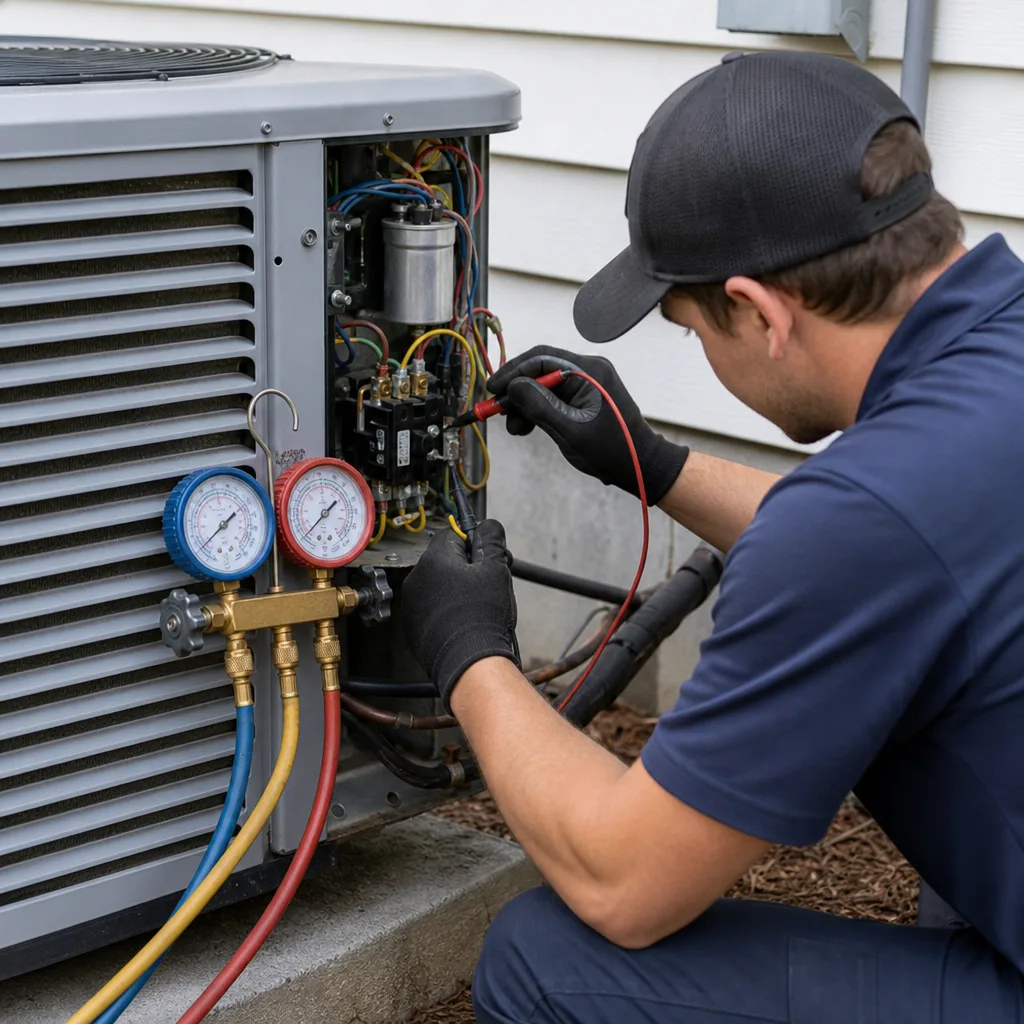
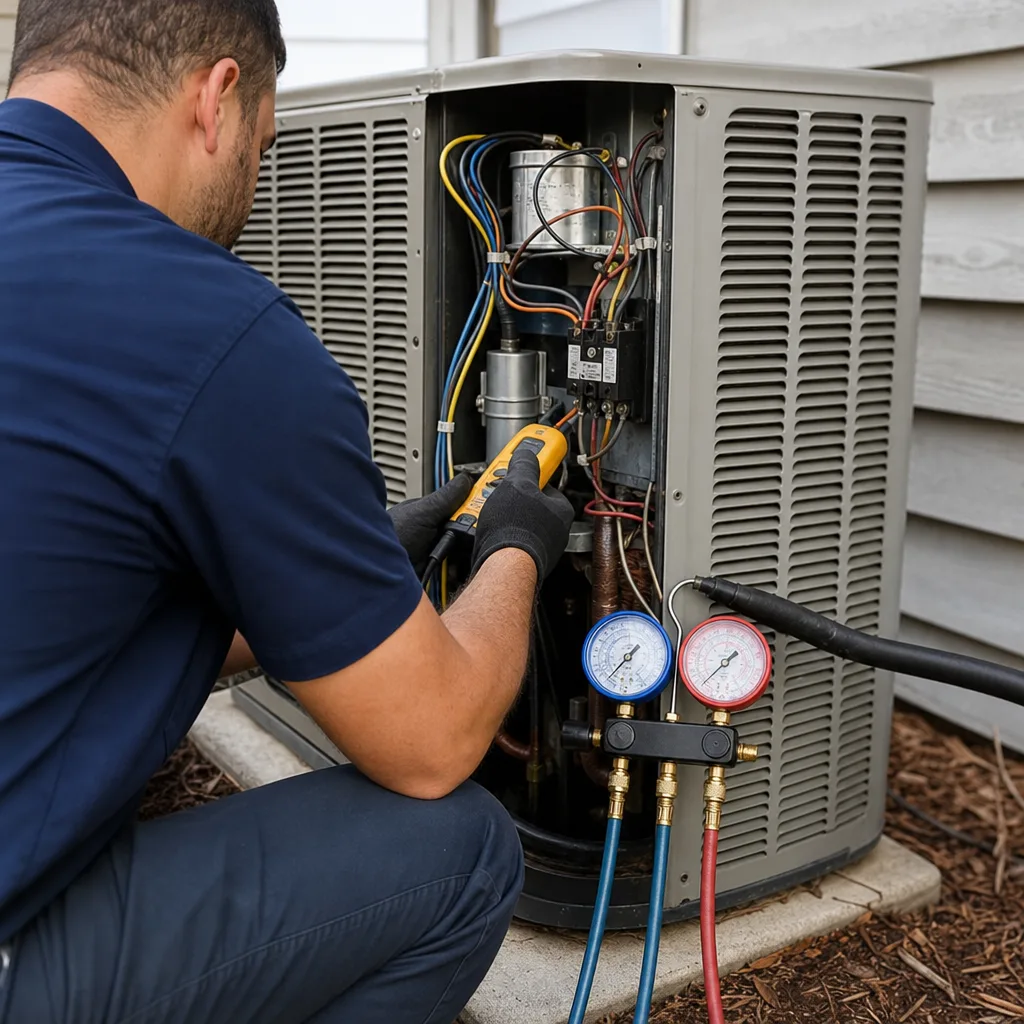
See the difference
 Before
 After
After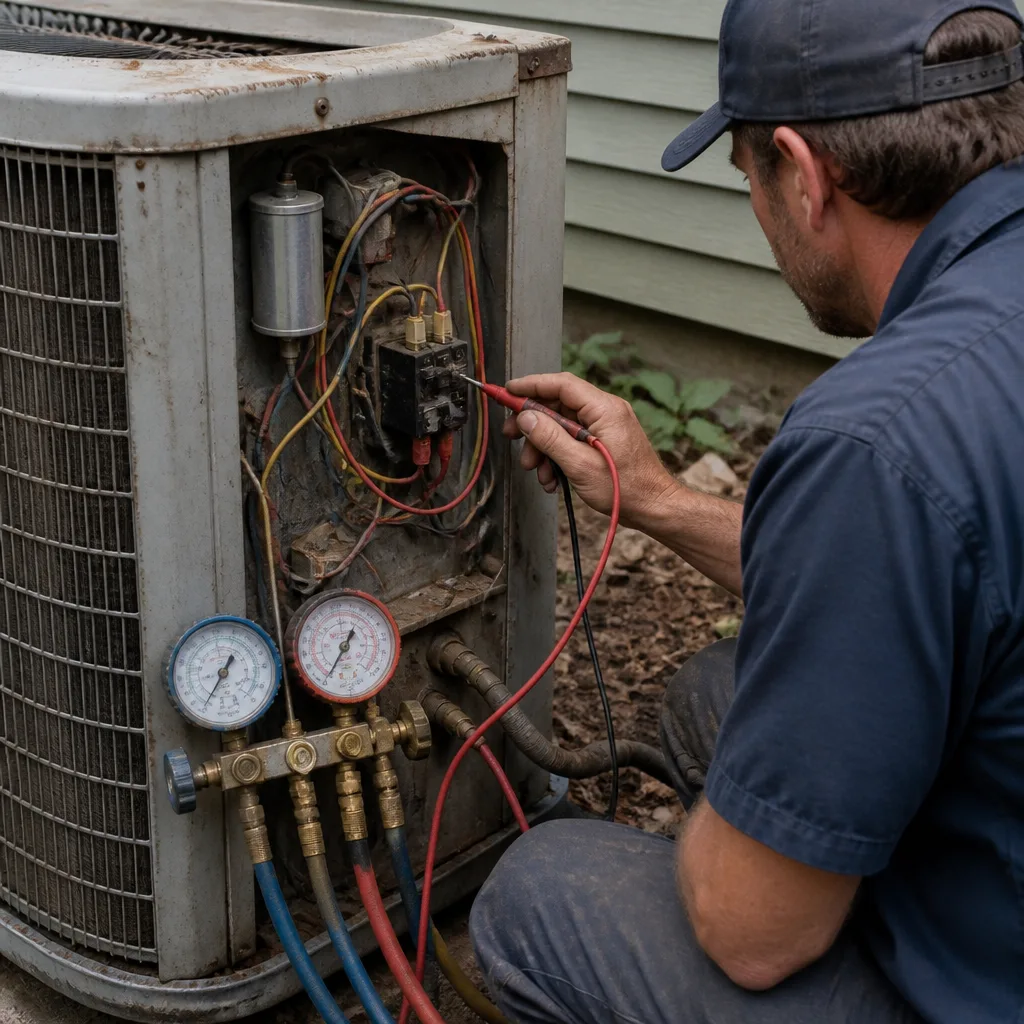 Before
 After
After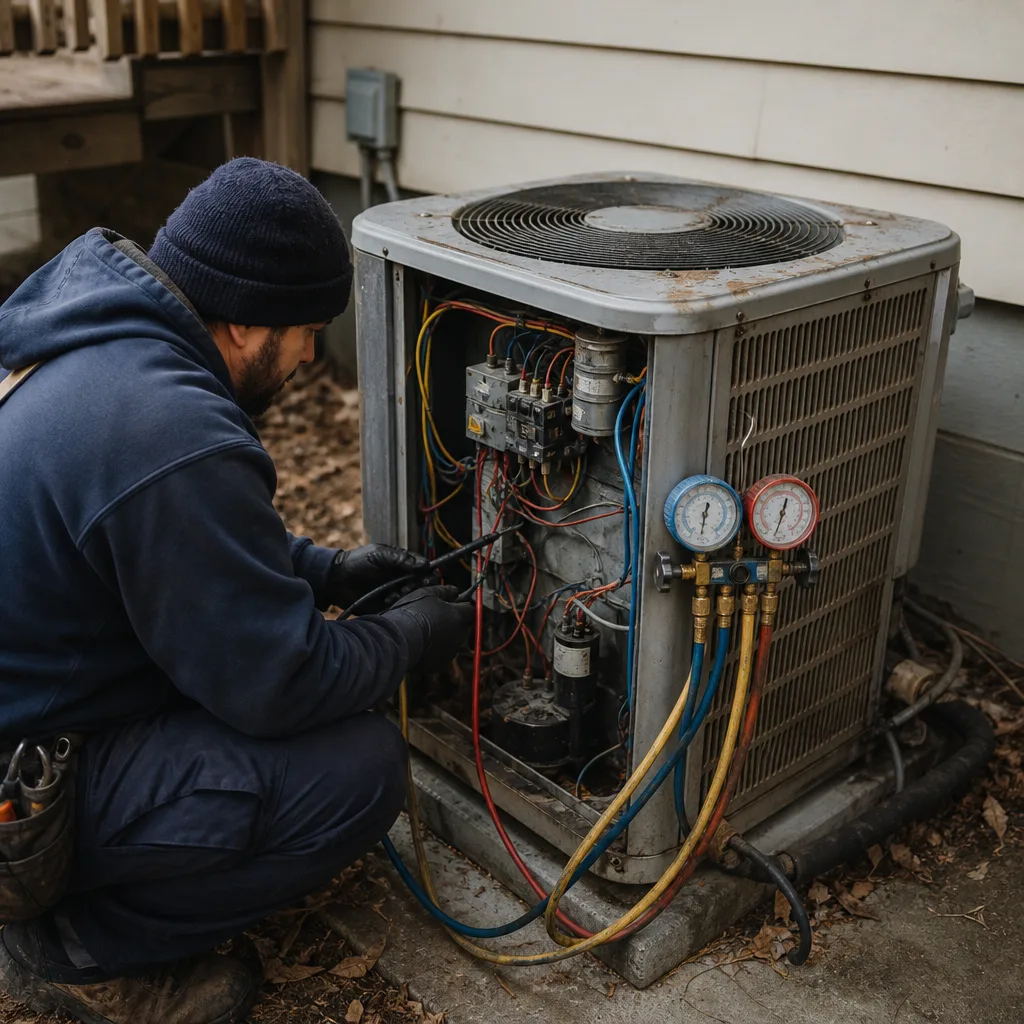 Before
 After
AfterWhen to Call a Professional
Some issues you can diagnose yourself with confidence: a tripped breaker, a clogged air filter, a thermostat with dead batteries. But the moment you’re dealing with refrigerant, electrical connections, or anything involving the compressor or furnace burners, call a licensed technician. Refrigerant handling requires EPA certification. Furnace heat exchangers and gas lines are safety-critical. A capacitor replacement involves stored electrical charge that can injure you even with the breaker off.
If your system is blowing warm air, making grinding or hissing noises, short-cycling (turning on and off every few minutes), or the condensate pan is overflowing, don’t keep resetting the breaker and hoping. These things get worse and more expensive. Halden Heating and Air Marietta offers free estimates in Marietta. Call (229) 514-0545, and a real person answers, 24/7.
Frequently Asked Questions
Every 60 to 90 days for most homes, but during high pollen season (March through May in Marietta) and again in July and August when the system runs constantly, check monthly and change when it’s visibly dirty. Homes with pets need 30-day changes. A clogged filter makes your system work harder than it should and is the simplest maintenance item most homeowners skip.
That depends on the home’s square footage, insulation, windows, and duct condition, which is why we never quote from square footage alone. A 2,400-square-foot East Cobb ranch might need 3.5 tons, while a well-sealed 2,400-square-foot newer build could be fine with 3.0 tons. The only correct answer comes from a Manual J load calculation. Call (229) 514-0545 to schedule one.
Expect 12 to 15 years from a well-maintained system in our climate. Humidity and long cooling seasons mean Marietta systems work harder than units in drier, cooler cities. Systems that aren’t maintained regularly start failing at 8 to 10 years. Heat pump compressors in builder-grade townhomes often fail at the earlier end of that range.
Heat rises, but in most Marietta two-story homes, the bigger culprit is ductwork. The ducts feeding the upstairs are typically longer, more likely to be kinked or disconnected, and run through hotter attic spaces. Adding a zoning system and repairing the ducts solves the problem in most homes. Adding a bigger AC unit usually doesn’t. See our Furnace Repair in Marietta page for winter comfort issues.
As a general rule, if the repair cost multiplied by the age of the system exceeds $5,000, replacement starts making financial sense. A $500 repair on a 15-year-old system is $7,500, which is replacement territory. A $300 repair on a 6-year-old system is $1,800, and repair is clearly the right call. The other signal is refrigerant: if your system uses R-22 (the old Freon), it’s time to plan a replacement, because R-22 is no longer produced and the remaining supply gets more expensive every year.
For most homes with a properly sized, variable-speed AC system, no. The AC handles dehumidification as part of its normal operation. But crawl-space homes in Marietta often do benefit from a whole-home dehumidifier or at minimum a sealed, encapsulated crawl space, because the humidity under the house drives indoor humidity levels up regardless of what the AC does. We assess this as part of every installation quote.
The Bottom Line
HVAC in Marietta comes down to four things: right sizing for humidity, honest prices in writing, ducts that actually deliver the air you’re paying to condition, and pre-season maintenance so you’re not the person calling at midnight in July. For more guides & resources on keeping your system running, explore our blog. The contractors who skip the load calculation, skip the permit, or skip mentioning the Georgia Power rebate are saving themselves time and hassle at your expense. Marietta’s clay soil and subtropical summers make our market different from every national guide’s assumptions. Your system should be sized, installed, and maintained for this zip code specifically.
Written by Andre Fuller, Owner at Halden Heating and Air Marietta, serving Marietta since 2004.